Young people are very aware of the environmental challenges that their local and global communities face. They think about climate change, the decline in biodiversity, the impacts of flooding and drought, and pollution in Lake Champlain. The Nature-Based Solutions Education Program offers a small but mighty antidote to these issues, where students can get outside, explore the natural world, work together, and genuinely contribute to the climate resiliency of their community by planting pocket-sized forests of native trees in their schoolyards.
The Nature-Based Solutions Education Program is a collaboration between the Burlington School District, Burlington Wildways, and Burlington Parks, Recreation & Waterfront. This program works to directly engage students in the creation and exploration of natural areas on their school campuses. As an educator with this program, I have witnessed time and time again, how a tree can be a wonderful teacher.
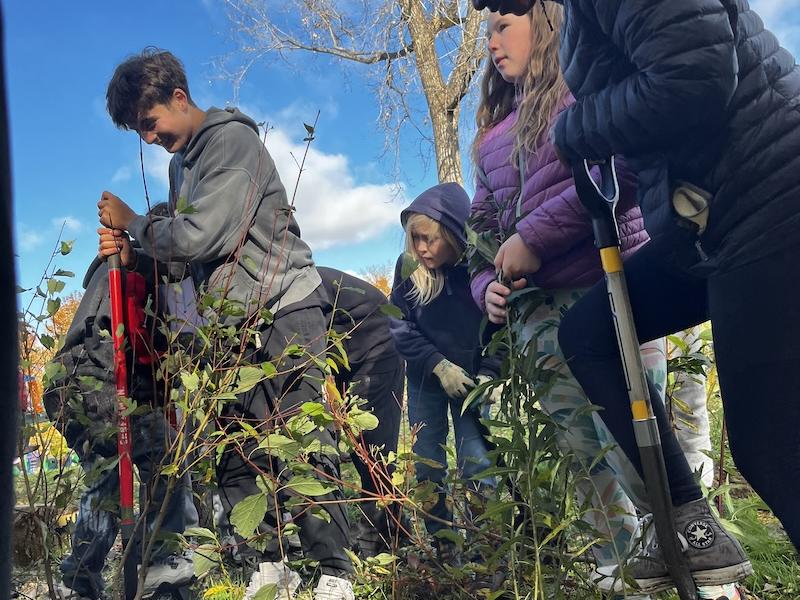
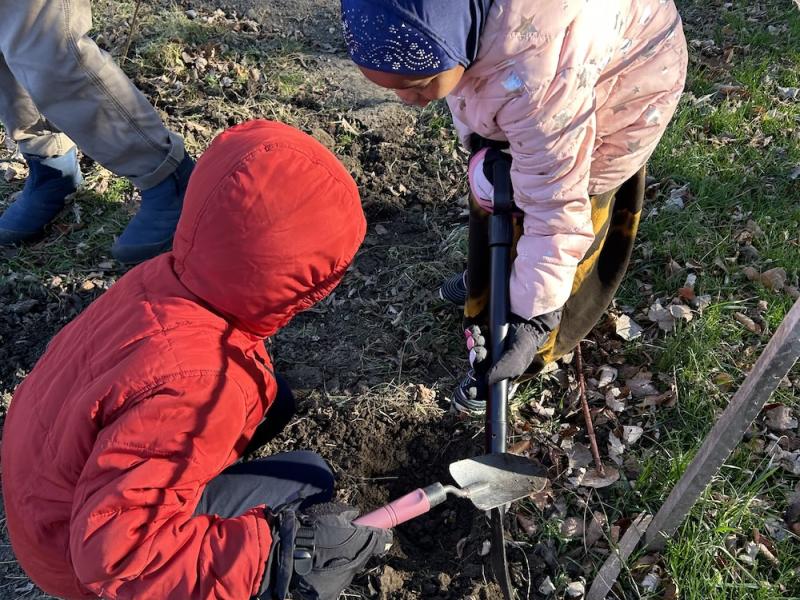
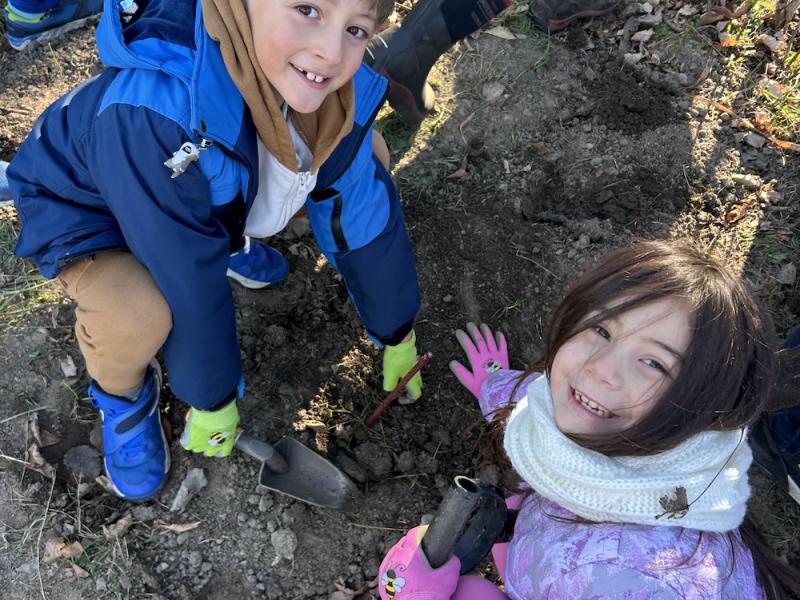
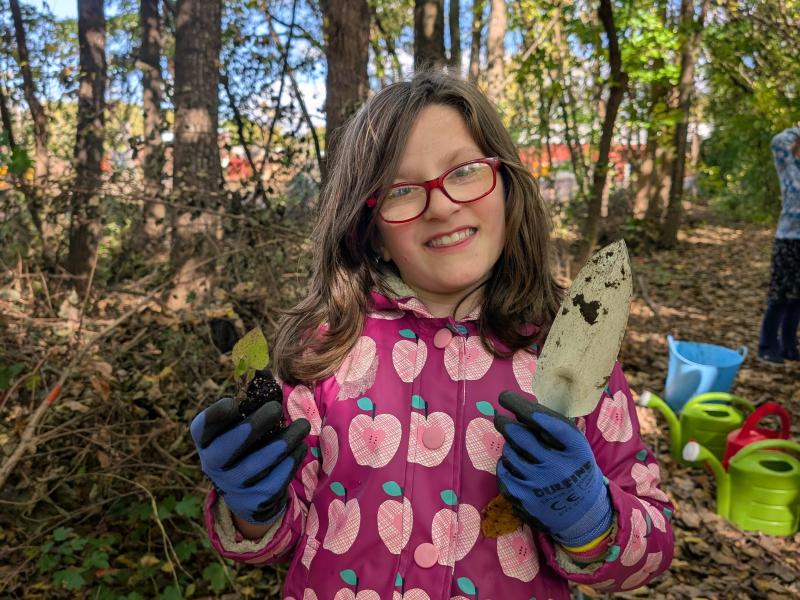
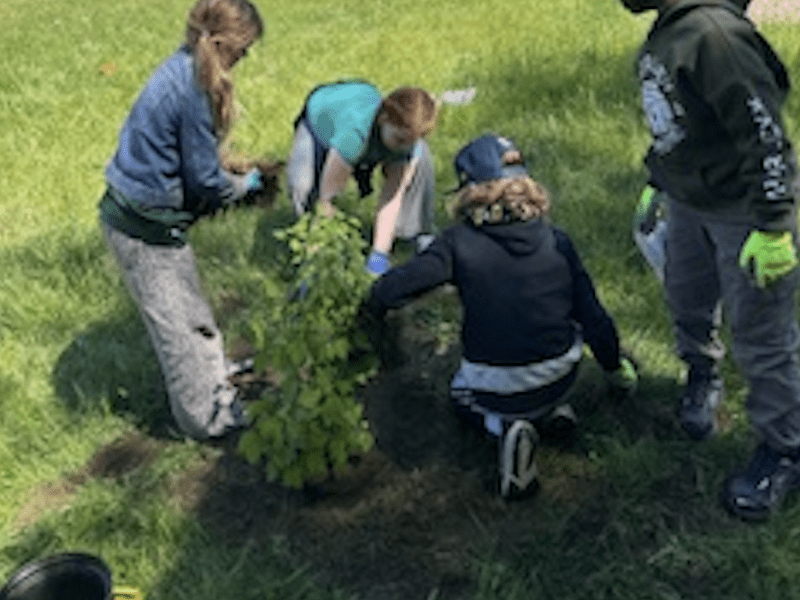
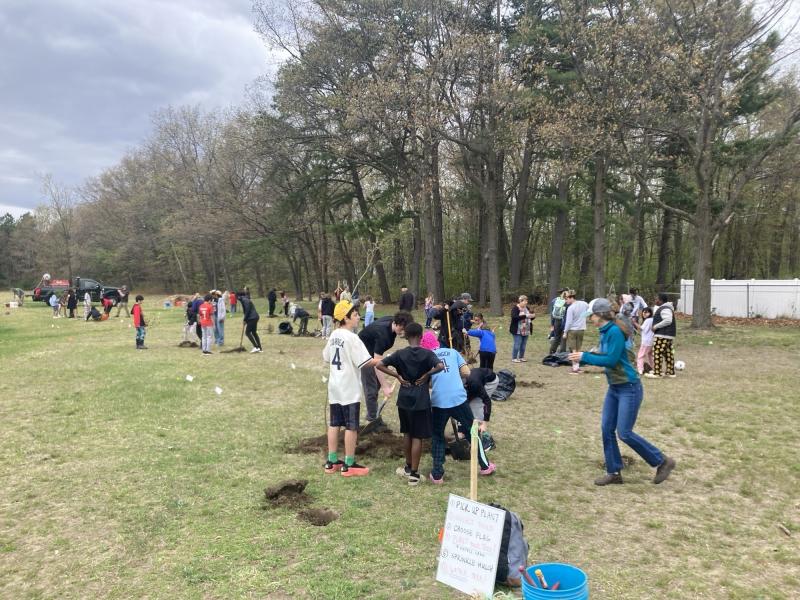
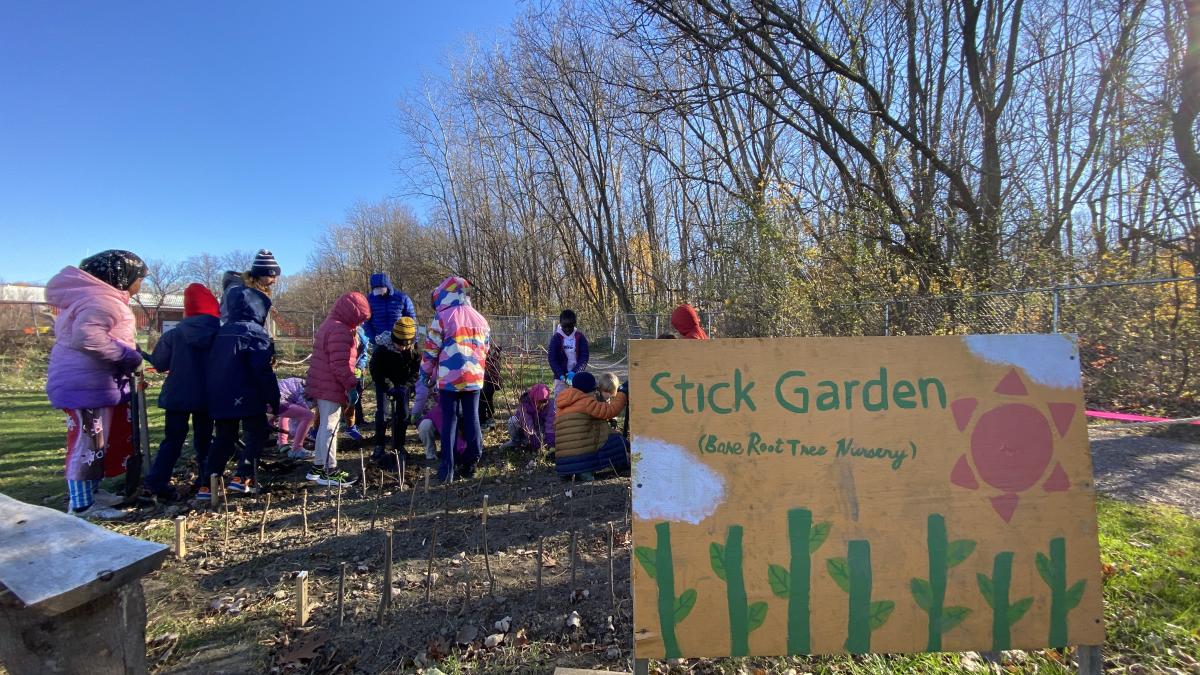
When you ask a kid to plant a tree, the mission is almost always met with resounding enthusiasm. The students are ready to be given sharp tools and to dig in the dirt. The first lessons that a tree teaches is teamwork and problem solving. Students work in groups to dig holes; they share tools, they assess and strategize when roots or rocks are encountered, they deliberate together how to save the worms and larvae they find along the way. If the weather is inclement or the soil is particularly heavy, they tend to double-down on determination – this tree will get planted!
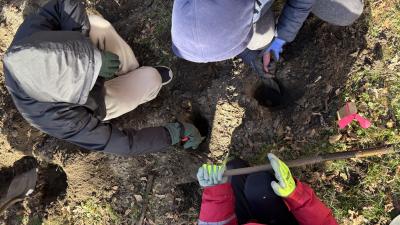
Students digging holes and measuring depth in tree nursery.
When many students plant many trees in a corner of their schoolyard, a forest begins to grow. And as these trees get bigger, new life emerges. Fallen leaf litter supports moths, spiders, and beetles. Butterfly larvae munch on leaves. Bees collect pollen from the understory of asters and goldenrods. Voles scurry through the tall grass and red-tailed hawks circle above in search of their next meal. Suddenly, these trees become a living lab, teaching lessons of food webs, carbon sequestration, life cycles, and habitat connectivity. Young students explore, observe, inquire and make connections all within this special space that they helped to create.
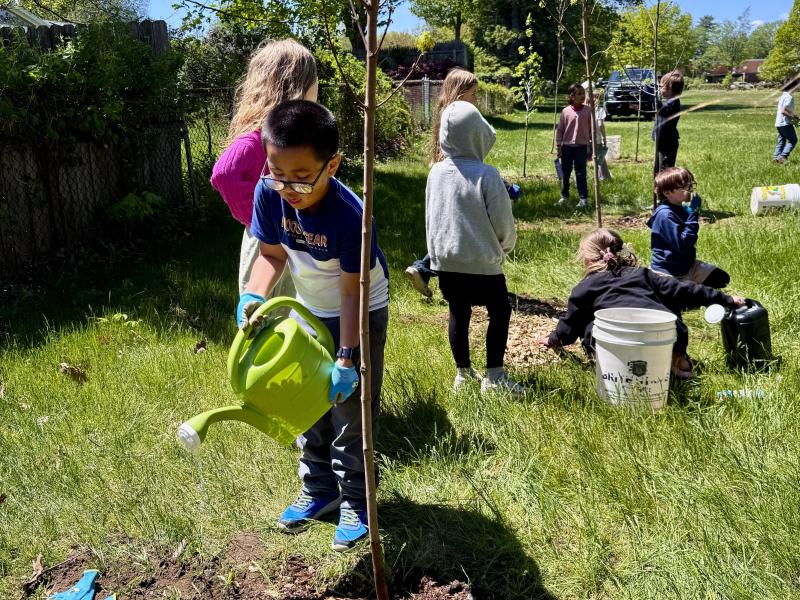
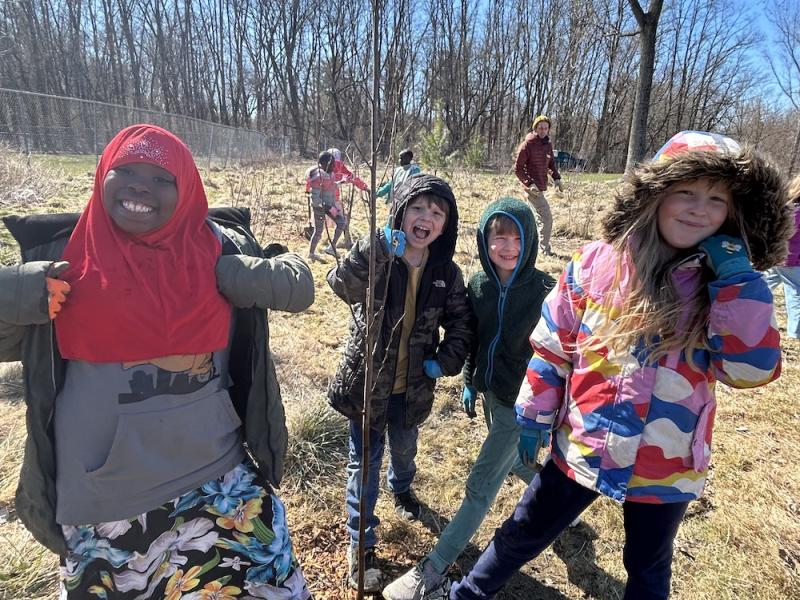
As students pat down the final scoops of soil around the base of their trees and race to grab watering cans, something happens that always amazes me. Kids, almost without fail, will name the tree that they plant. “This is Tickle Tree! This is Renaldo! This is Grandpa!” they exclaim as they pet the soft needles of a white pine, or hug the slender trunk of a red oak, or look up to the smooth buds of a basswood. Young people, it seems, have an instinctive way of connecting with the natural world. Why wouldn’t we name something we care for? These trees teach a sense of stewardship, responsibility, and even a practical comradery with the living world.
This is just a glimpse into this program, and you can read more about the impact students are making below.