Empowering Climate Resiliency through the Nature-Based Solutions School Program
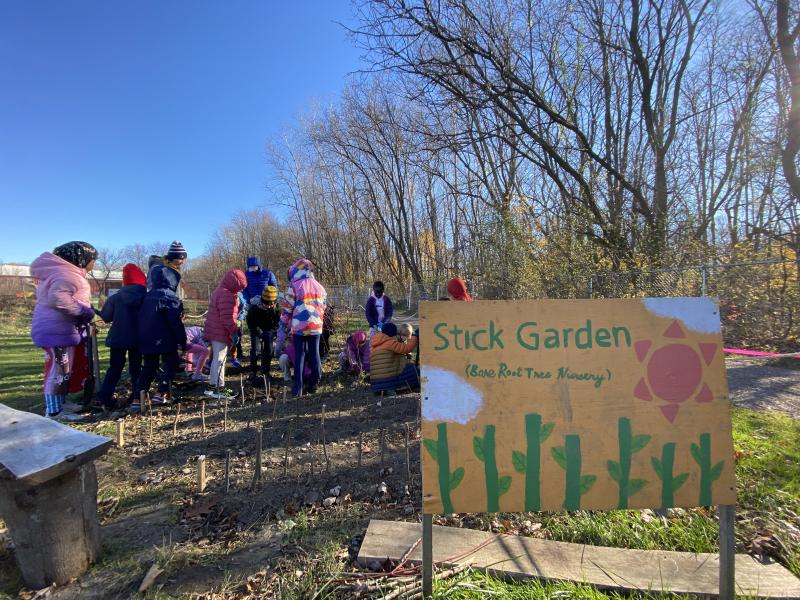
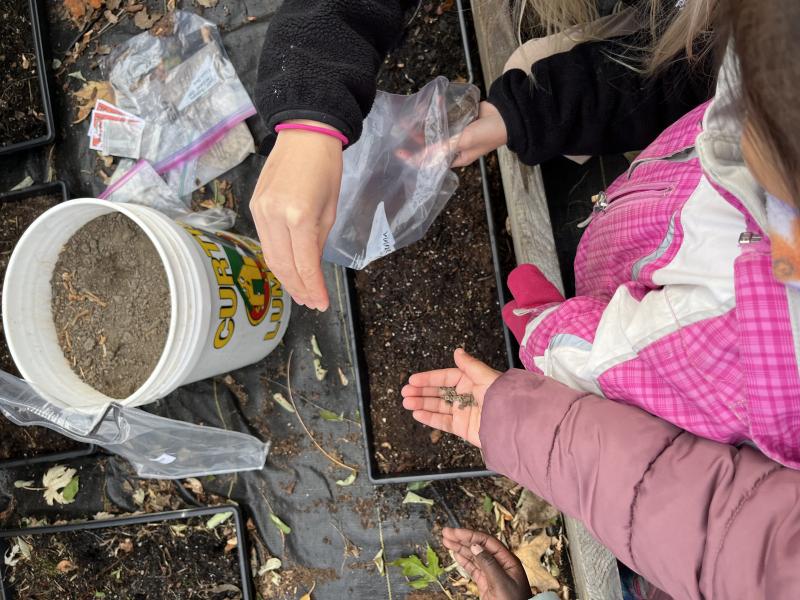
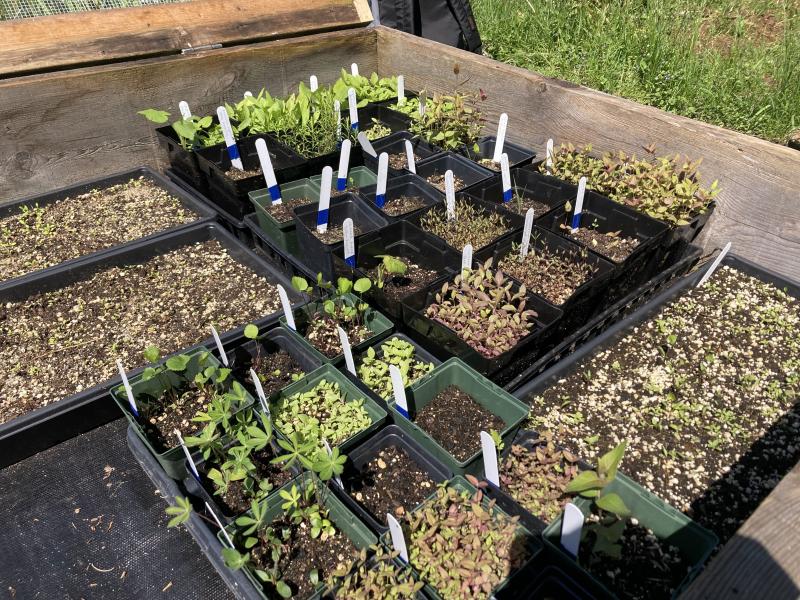
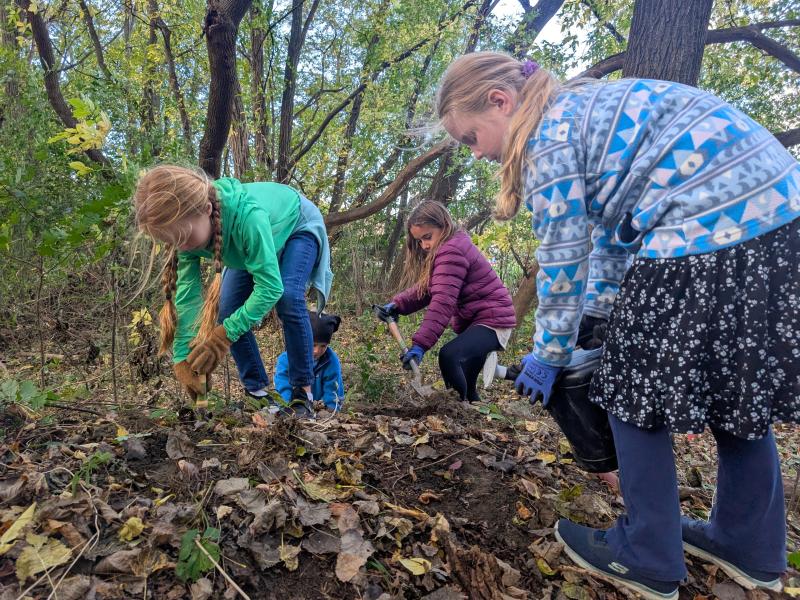
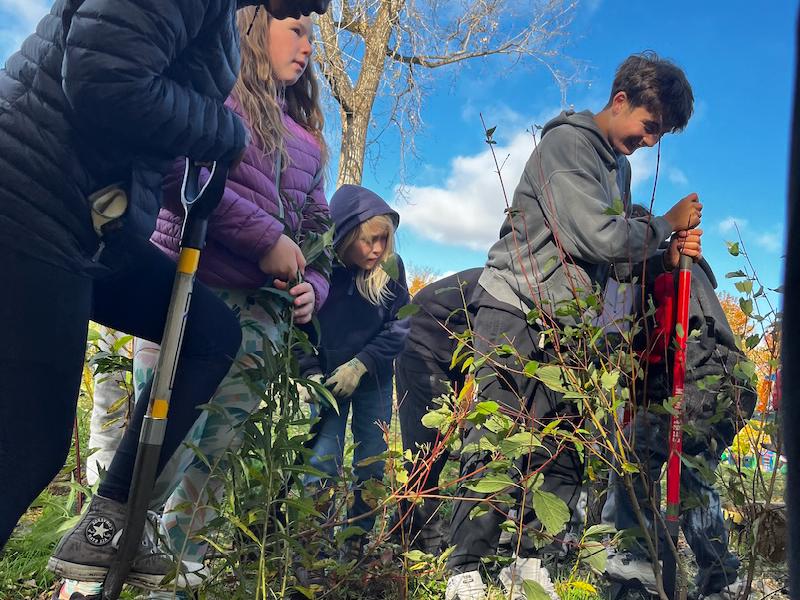
Students put their classroom knowledge into practice to help mitigate the local effects of climate change by growing native plants, planting new pocket forests, and engaging in land stewardship right on their own school campuses. Students tend to tree and seed nurseries, remove non-native introduced species, plant native trees, and observe the insects and wildlife that emerge within newly created habitat. This hands-on nature-based programming empowers them to learn about and find the joy in the natural world!
This program helps the City of Burlington meet its nature-base climate solutions goals and aligns with the Burlington School District's science and literacy standards. Native trees and other plants help to store carbon, cool our community and restore biodiversity - they are important natural infrastructure for a climate resilient future!
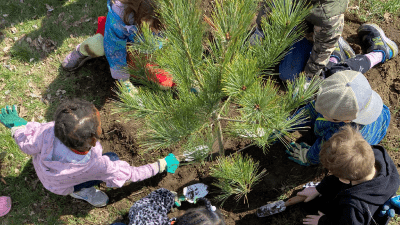
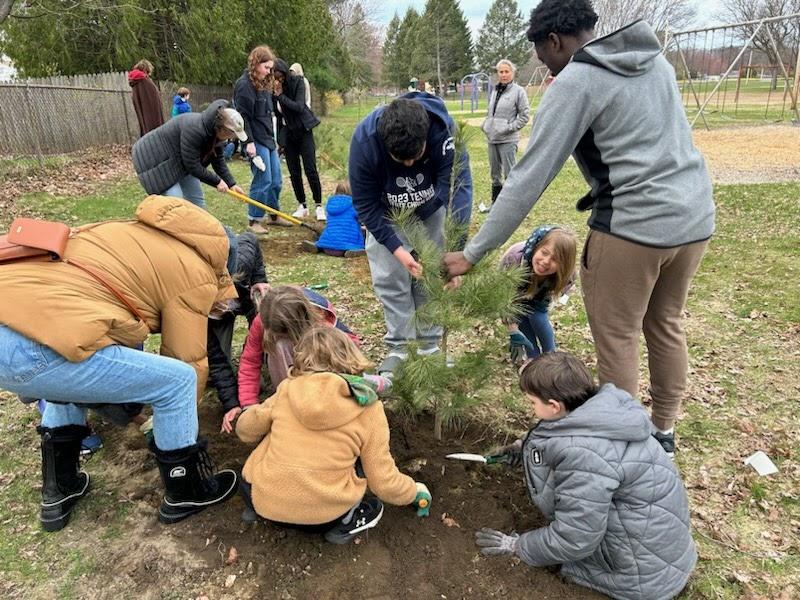
Students planting a tree in their campus pocket forest.
Planting for a resilient future
Burlington’s tree canopy and green spaces act as natural air conditioning, keeping our city cool. Our open spaces act as natural infrastructure for the city and are particularly important when they can create comfortable community gathering and learning spaces.
Burlington, VT is the 4th fastest warming city in the US.
2000+ plants
Grown by students and planted in the Burlington Landscape since 2022
41 unique classrooms
Served across the Burlington School District by this program in the 2025-26 school year.
743 unique students
Engaged in hands-on nature-based programming in the 2025-26 school year.
112 program sessions
For a total of 78 hours of hands-on programming in the 2025-26 school year.
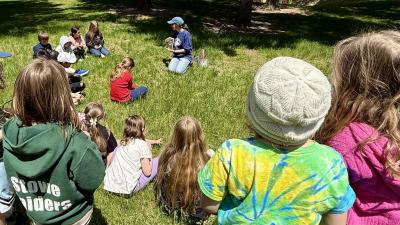
The most beneficial aspect has been the opportunity for students to engage in hands-on, place-based learning that connects them directly to their local environment. Whether planting native trees in the nursery, analyzing footage from the wildlife camera, or studying pollinators and birds in the wildlife corridor, students developed a deeper understanding of climate resilience and their role in protecting ecosystems. These experiences sparked curiosity, empowered student-led action, and built a strong sense of connection to our local natural spaces—all while reinforcing science, literacy, and stewardship in a real-world context.